Reverse osmosis drinking water in Sacramento
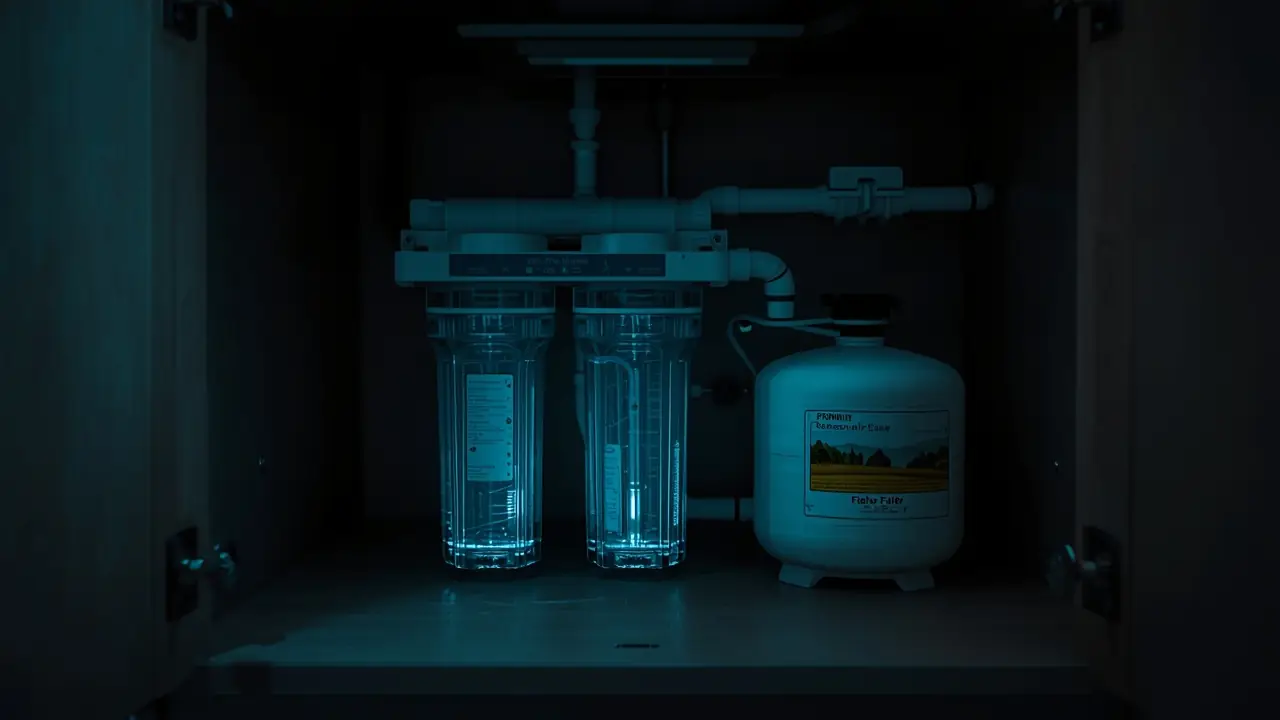
A reverse osmosis (RO) system sits under your kitchen sink and gives you filtered water for drinking and cooking. It reduces dissolved solids, and the EPA says RO can reduce PFAS.
Who is RO a good fit for?
- People who buy bottled water and want to stop hauling it
- Homes on well water, where you want an extra layer for drinking water
- Older homes, where you want a filter certified to reduce lead at the tap
- Anyone who does not like the taste of their tap water
How reverse osmosis works
Water passes through a few stages. First, filters catch sediment and chlorine. Then the water is pushed through a membrane with very tiny pores. Most dissolved solids cannot pass through. Clean water goes to a small tank or straight to your faucet. The rest rinses the membrane and goes down the drain.
What about PFAS? These are man-made chemicals that break down very slowly. The EPA says (opens in new tab) that reverse osmosis and activated carbon can reduce them. Want to know if PFAS were found in your area? Your utility's yearly water report lists it. We explain how to read it in Is Sacramento water safe to drink?
RO or a softener?
They do different jobs. A softener treats hardness for the whole house. RO filters drinking water at one tap. Many homes need only one, and some need neither. Read reverse osmosis vs. a water softener to see which fits.
What to look for in a system
- Certification. Look for NSF/ANSI 58. It means the claims were tested.
- Waste ratio. Ask how much water goes to the drain for each gallon you drink.
- Filter costs. Ask how often the filters and membrane need changing, and what they cost.
- Space. Tank systems need room under the sink. Tankless units need a power outlet.
National cost guides put a typical under-sink RO system at a few hundred dollars up to about $950 installed. We give you a written quote only after we test your water.
Know your water before you buy anything
We test hardness, TDS, chlorine and pH at your kitchen sink for free, and you keep a printed report. If you do not need a system, we will tell you.
Book my free water testCommon questions
What does reverse osmosis filter out?
RO pushes water through a very fine membrane. It reduces dissolved solids (TDS), and systems certified to NSF/ANSI 58 can also reduce things like lead and some PFAS. Check the certification for the exact list.
Does reverse osmosis waste water?
Yes, some. Part of the water rinses the membrane and goes down the drain. Newer systems waste much less than older ones. We size the system and set it up to keep waste low.
Can I add minerals back?
Yes. An alkaline or mineral stage can add a small amount of calcium and magnesium back after the membrane. Some people prefer the taste.
Keep reading
 GuideReverse osmosis vs. water softener: which one do you need?They do different jobs. Here is how to pick.
 GuideIs Sacramento tap water safe to drink?What the utility reports say, and what they cannot tell you.
 ServiceWhole-house water filters in SacramentoFiltered water at every tap and shower.
 ServiceWater softeners in Sacramento CountyWho needs one in Sacramento, and who can skip it.