Reverse osmosis vs. water softener: which one do you need?
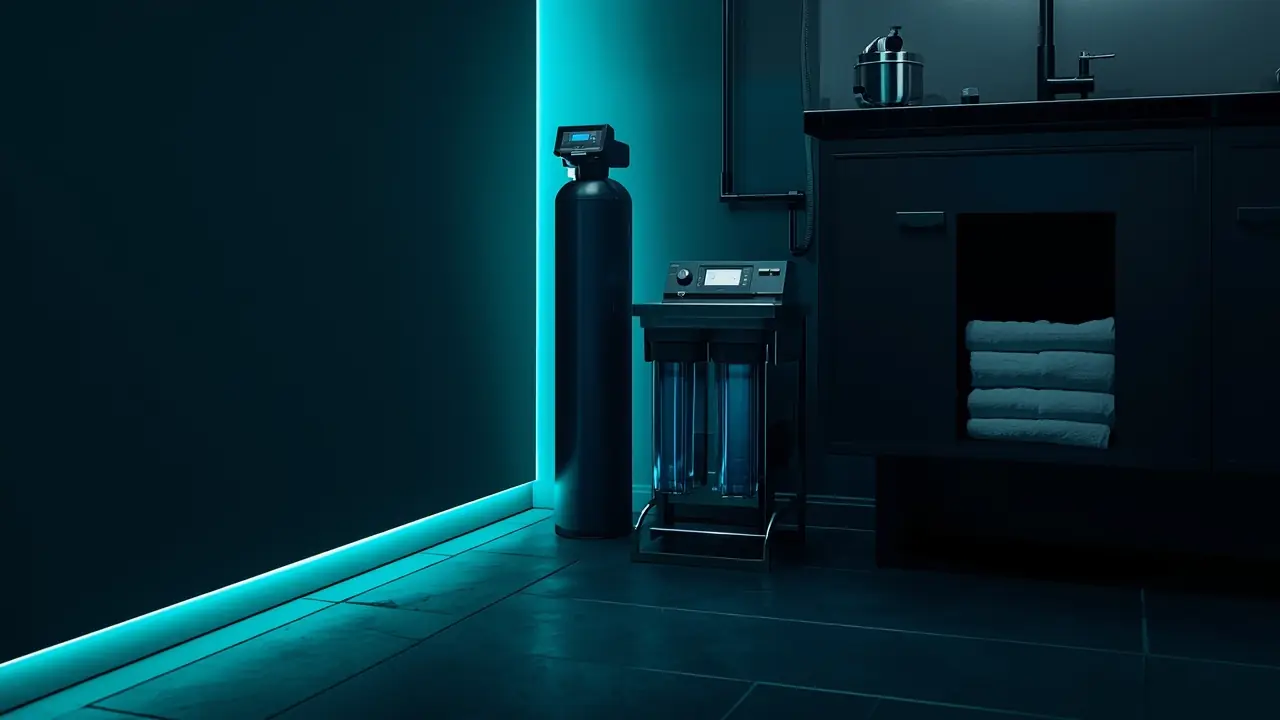
A water softener and a reverse osmosis (RO) system are not two versions of the same thing. A softener treats hardness for the whole house. RO filters drinking water at one tap. Most homes need one or the other, some need both, and some need neither.
The quick comparison
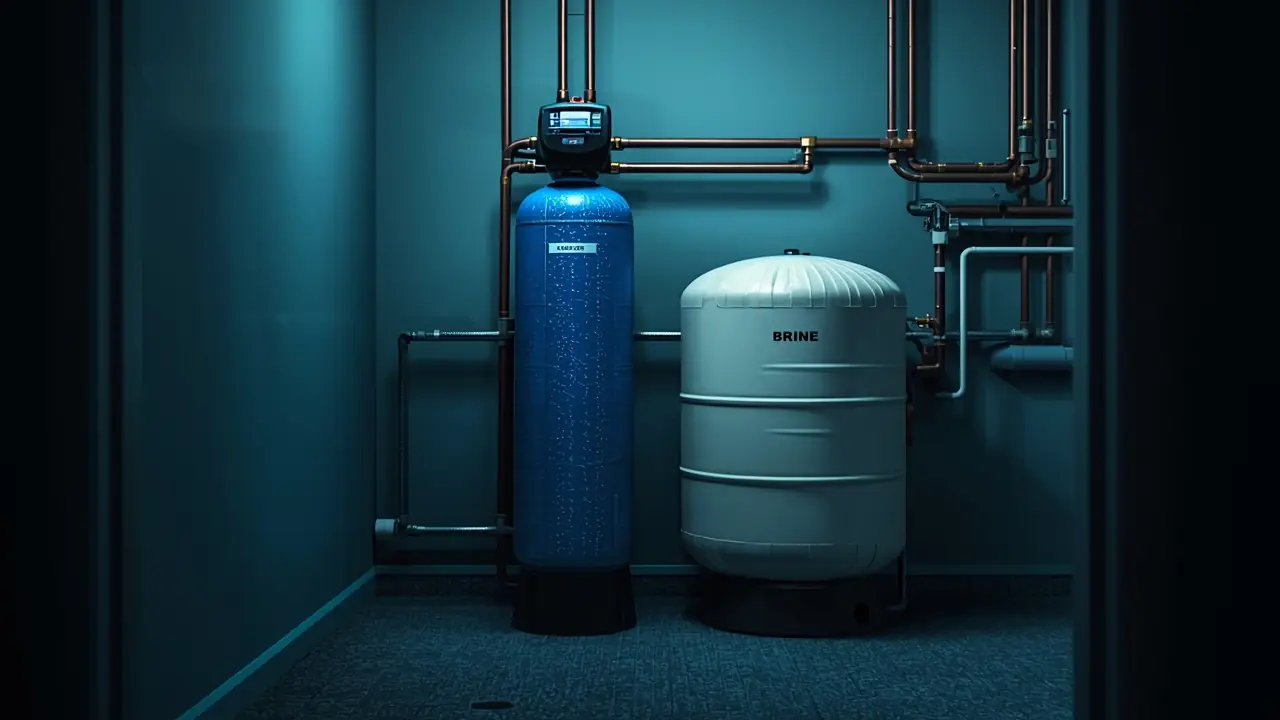
Whole house
Water softener
Removes calcium and magnesium. Stops spots and scale in every tap, shower and appliance.
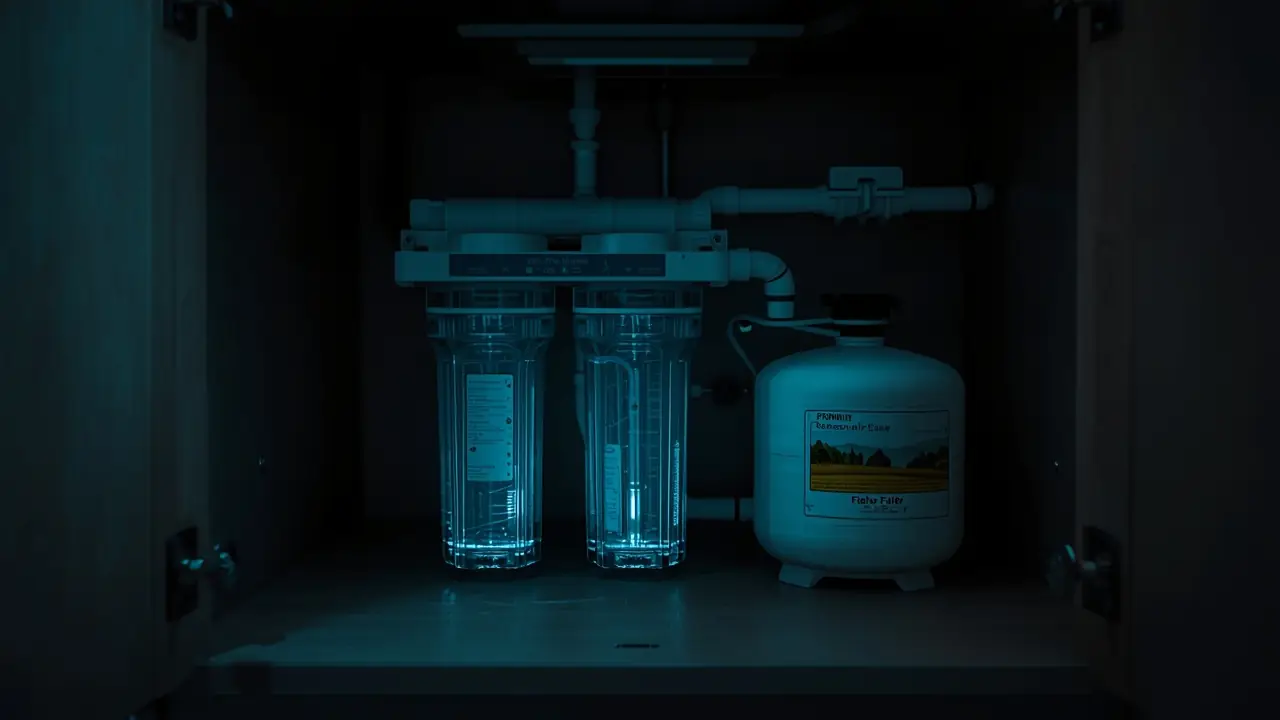
One tap
Reverse osmosis
Pushes water through a fine membrane. Filtered water for drinking and cooking.
| Feature | Water softener | Reverse osmosis |
|---|---|---|
| Main job | Removes hardness (calcium, magnesium) | Filters drinking water |
| Where it works | Whole house | Usually one kitchen tap |
| Fixes | Spots, scale, poor lather | Taste, dissolved solids, some contaminants |
| Does not fix | Chlorine taste, most contaminants | Scale in showers and appliances |
| Upkeep | Add salt or potassium | Change filters and membrane |
Pick a water softener if...
- Your water tests above about 7 grains per gallon
- You fight white spots and crusty faucets all over the house
- You want to protect your water heater and appliances from scale
In Sacramento, that is most often homes on wells or in high-groundwater areas. River-fed city water is usually soft enough to skip it. Read Do I need a softener with city water?
Pick reverse osmosis if...
- You buy bottled water and want to stop
- You do not like how your tap water tastes
- You want an extra layer against things like lead from old pipes or PFAS
The EPA says (opens in new tab) reverse osmosis can reduce PFAS. Look for a system certified to NSF/ANSI 58 so the claims are tested. More on our reverse osmosis page.
When to get both
If your water is hard and you also want better drinking water, both make sense. The softener goes first, where water enters the house. RO goes under the kitchen sink. Softer water going into the RO system helps its membrane last longer.
What about cost?
An under-sink RO system usually costs less than a softener. National guides put typical softener installs around $1,100 to $3,000. See the full breakdown in How much does a water softener cost?
Know your water before you buy anything
We test hardness, TDS, chlorine and pH at your kitchen sink for free, and you keep a printed report. If you do not need a system, we will tell you.
Book my free water testCommon questions
Is reverse osmosis better than a water softener?
Neither is better. They solve different problems. A softener removes hardness minerals for the whole house to stop spots and scale. Reverse osmosis filters drinking water at one tap to reduce dissolved solids and some contaminants.
Can I have both?
Yes, and in hard-water homes it is common. The softener protects pipes and appliances, and the RO system gives you filtered drinking water. Softening first also helps the RO membrane last longer.
Does reverse osmosis soften water?
At the one tap it serves, RO removes most hardness minerals along with other dissolved solids. But it does nothing for your showers, water heater or other taps.
Keep reading
ServiceWater softeners in Sacramento CountyWho needs one in Sacramento, and who can skip it.
ServiceReverse osmosis drinking water in SacramentoFiltered drinking water at the kitchen sink.
 GuideDo I need a water softener with city water in Sacramento?A simple way to decide, using real local numbers.
 GuideHow much does a water softener cost installed?Installed price ranges, running costs, and what drives the price.